

Why Quality Social Media Content is no Longer Optional for Restaurants
From Frameflow
And how to create scroll-stopping photos and videos without blowing your budget
Ask any restaurant owner where new guests are coming from, and you’ll hear a familiar mix: word of mouth, Google, press… and increasingly, social media.
Today’s diners aren’t just searching for menus; they’re scrolling for inspiration. They want to see the food, the vibe, the cocktails, the patio, the energy. And the data is clear: social media is now one of the most influential decision-making tools in restaurant marketing.
Diners Are Letting Social Media Decide Where They Eat
Recent industry surveys show just how powerful social platforms have become in the dining journey:
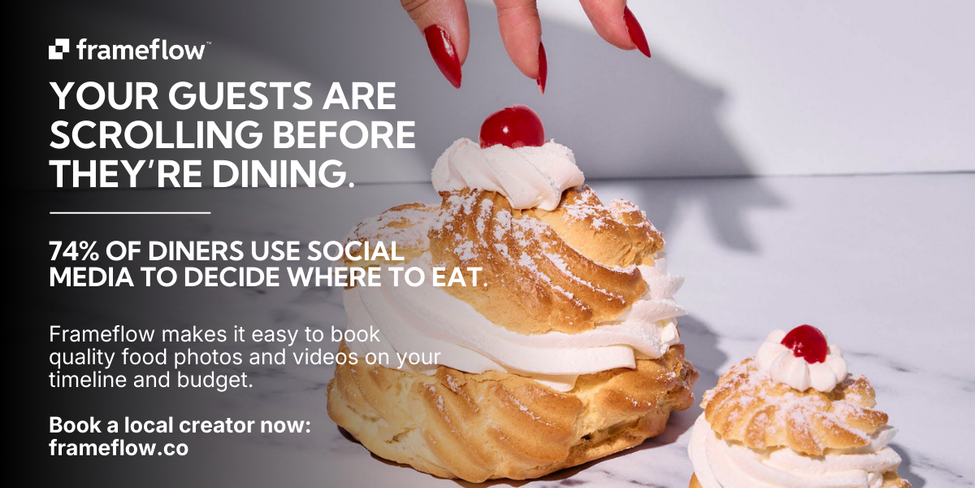
- 74% of diners use social media to decide where to eat.
- 72% research restaurants on social platforms before visiting.
- 68% check a restaurant’s social media specifically before dining there.
In other words, your Instagram, Facebook, or TikTok presence isn’t just “nice to have,” it’s often the first impression of your restaurant.
Why Quality Food Photos and Videos Make the Difference
In a crowded feed, quality wins.
Academic research supports what restaurant marketers already feel intuitively: visual content heavily influences dining decisions. Studies on restaurant choice behavior show that diners actively seek social content and place trust in what they see when deciding where to eat.
Blurry photos, dark lighting, or inconsistent visuals can unintentionally send the wrong message. On the flip side, professional-quality images and short-form videos can:
- Make food look crave-worthy and memorable.
- Communicate atmosphere and brand personality instantly.
- Increase engagement, saves, and shares.
- Turn casual scrollers into booked tables.
You don’t need a national campaign, but you do need content that reflects the care and quality you put into your food and guest experience.
The Challenge: Time, Budget, and Finding the Right Fit
Most restaurant owners know they need better content. The challenge is how to get it:
- Hiring a full-time photographer or videographer isn’t realistic for many operators.
- Traditional agencies can feel expensive or overly complex.
- Freelancers are hard to vet, manage, and schedule.
- And content needs change constantly. Menus change, seasons shift, specials come and go.
How Frameflow Helps Restaurants Create Better Content on their Terms
Frameflow connects restaurants with vetted local photographers, videographers, and content creators who specialize in food, hospitality, and social-first content. Restaurants can book creators based on:
- Style (moody, bright, editorial, casual, video-first, photo-heavy)
- Timeline (one-off shoots, monthly refreshes, seasonal updates)
- Budget (clear packages with no surprises)
Instead of a one-size-fits-all approach, restaurants can choose content support that fits their brand, pace, and marketing goals whether that’s launching a new menu, refreshing social feeds, or building a content library for months ahead.
And because Frameflow works with local creators, the content feels authentic, not stock, not staged, and not out of touch with your community.
The Takeaway for Colorado Restaurants
Social media is no longer just a promotional channel. It’s a decision-making tool. Diners are watching, scrolling, and choosing restaurants long before they ever open Google Maps.
Investing in quality photos and videos doesn’t have to mean overhauling your marketing strategy or blowing your budget. With the right tools and partners, it can be simple, flexible, and incredibly effective.
Because in today’s restaurant landscape, what guests see online often determines whether they ever walk through your doors.
Book your content shoot at https://frameflow.co/.
Sources
- Restaurant Industry Social Media Statistics (2025)
- National Restaurant News & Brilli Survey (2025)
- RestaurantDive / MGH Advertising Social Media Survey
- Consumer Poll on Restaurant Reviews & Social Accounts
- The Influence of Social Media Influencers on Consumers’ Restaurant Choice (2023, peer-reviewed)
- The Impact of Social Media Use on Consumers’ Restaurant Decision-Making (2025 qualitative study)